
French 75mm Field Gun
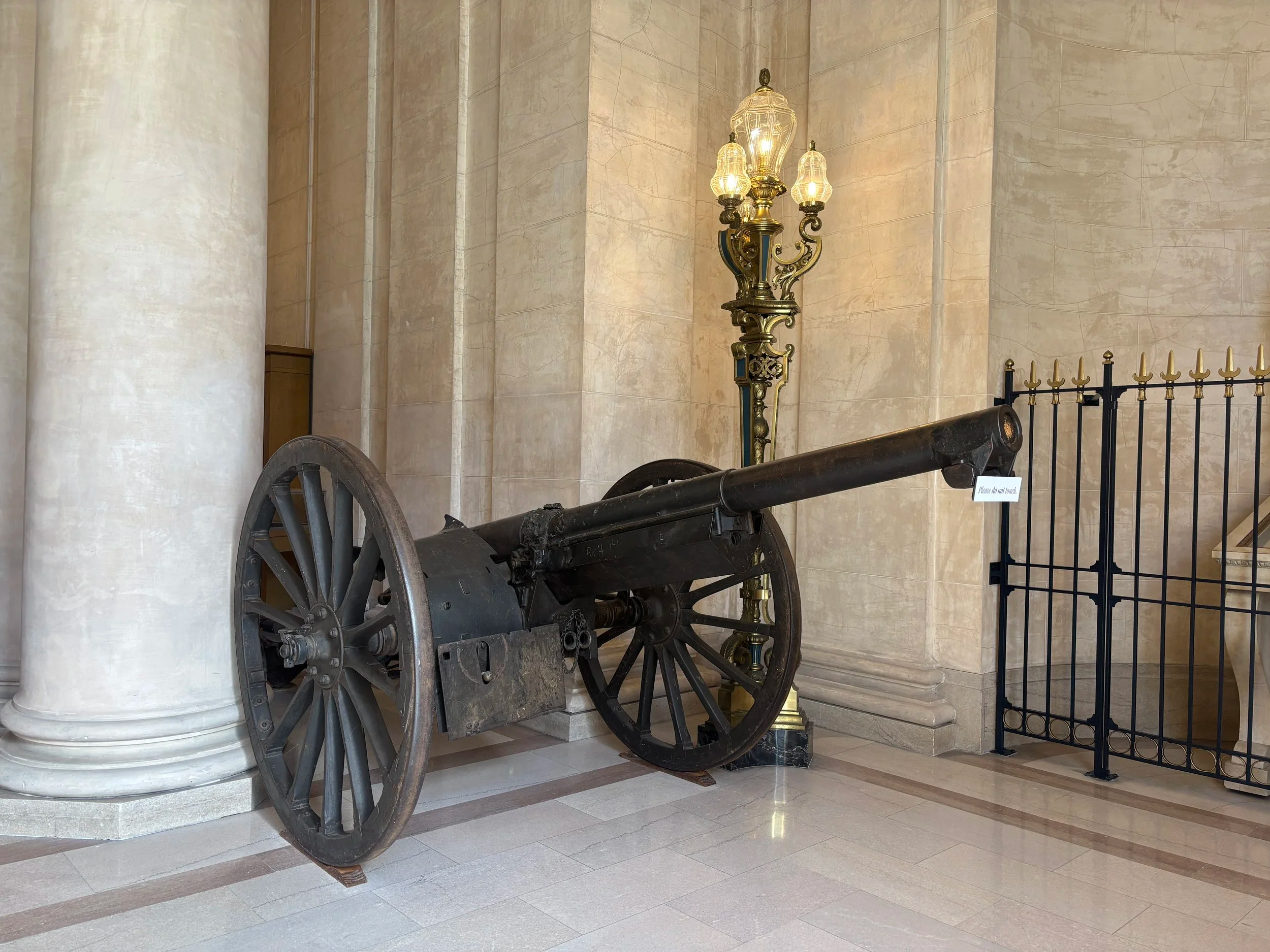
The French 75mm Field Gun (French: Canon de 75mm) was a quick-firing, anti-personnel field gun. Originally adopted in 1898, it quickly became the backbone of the French army. In the beginning of World War I (1914—1918), when combat was still in open fields, it was primarily used to fire time-fused shrapnel shells that exploded above or ahead of advancing enemy troops. By 1915, when extensive trench networks were created, it fired high explosive shells. By 1917, it was primarily used to deliver poisonous gas via shells. The field gun was used by both the French and the Americans as the Americans had inadequate artillery when they first arrived in Europe.
This particular field gun was created by the French state-run arsenal Atelier de Construction de Bourges in 1915. Note the extensive damage on the gun shield and breach which lets us know it took a near-direct hit during combat. This is a soft example of the damage shrapnel shells could inflict on soldiers and just how deadly the war was. It was brought back to San Francisco during a victory parade and has since been on display at the War Memorial Veterans Gallery.
